ABM: Under The Dome – Today

Today’s ABM strategies are competitive and complicated. Do they work?

The latest ABM (anti ballistic missile) interceptor failed another test in June of 2013.  This missile has had an erratic record, 8 fails out of 16 tests.

Information like this is a little confusing because this week you read “Test of ABM interceptor failed, has failed half its tests so far”  and next week you read : “New test of ABM interceptor successfully hit its target and has done well in the last 11 tests.”

Although these sound contradictory, both reports could be right – it is U.S. strategy that is confusing.

This second part of our  study of the American ABM effort focuses on current techniques being used to defend against attacking missiles.  Here is where confusion arises:

  • An attack missile has 3 phases in its trajectory, each  with its own defense strategy.
  • The 3  military branches have developed their own ABM solutions.
  • The Department of Defense has an additional Missile Defense Agency ‘doing its thing.’

There are  many ABM solutions in our Continue reading

Posted in Technology | Tagged , , , , , , , , , , , , | Leave a comment

ABM: Under The Dome – Safeguard

U.S. ABM system still fail tests.  No dome of protection from current ABM choices?

Another test of our  antiballistic missile defense system this last June;  it failed again.    AviationWeek&SpaceTechnology, began its coverage with “another test failure casts doubt …”  Yahoo News reported that the June’s launch was the 16th test of the new intercept hardware, of which 8 have worked.  This is different from:  the 8th successive kill of an incoming warhead in 16 tests.

click for list of our other ABM posts

This post is the first of several planned to review what has been done in American missile defense efforts.  This is what we cover, this post —

  • We start with an overview of why we try to do missile defense; basic ideas and terms used in this effort.
  • Discuss discussion of the Safeguard system,  our first (successful) attempt to provide ABM (Anti Ballistic Missile) interceptor protection.

Click any image to see  its expanded form.  Other posts discuss the current confusing situation, and why we are proceeding the way we are.

ABM issues form a shifting field of study

AtomBomb_img

Fig 1   15 kT test, 1953

Attack missiles are usually divided into categories, as shown in this table.  They describe the distance between the target and the launch point;  but notice that the missiles range from relatively short range and slow to transcontinental and nearly orbital speeds.

A payload will range from high explosive (hundreds of equivalent TNT-kilograms) to thermonuclear (millions of equivalent TNT-tons), Fig 1.  It makes sense to Continue reading

Posted in Technology | Tagged , , , , , , , , , | 4 Comments

Inequality, Luddites and Paul Krugman

How can we maintain social stability when the highly educated are as likely as the poorly educated to become obsolete by disruptive technology?

Paul Krugman published his 2013 Jun 14 OpEd Essay Sympathy For The Luddites in the New York Times.  It is not often that we get a newsprint essay that says clearly what so many have tried to express.

Paul Krugman 2012 195x246Krugman is one of my heroes.  He is a Nobel Prize winner in Economics (2008) and has a gazillion (just an estimate) technical publications, along with the courage to publish twice a week in a national newspaper on things that are important.  Courageous?  Think of of what Rush Limbaugh says about him.  (Mr. Limbaugh is one of the best paid hired guns the Rancid Right owns; he is under contract for $400M over 8 years … $50M per year … which puts him in the top 0.01% of all earners. Definitely, Rush is  NOT   just one of the common folks.) Continue reading

Posted in Economics | Tagged , , , , | 3 Comments

Water, Groundwater and XL

Water reserves in the Midwest are an endangered resource.  XL performance will disrupt both our national food supply and the water for many cities.

High Plains Aquifer is dangerously depleted in large regions.  This was the message by Michael Wines in the 2013 May 20 issue of the The New York Times.  The water table in the mid US aquifer is being severely drawn down, certainly in Southwest Kansas (KS).   This is variously called the Ogallala or  High Plains aquifer if adjacent resources are combined.

Ben Stein

Ben Stein

On 2013 Jun 1, actor/commentator Ben Stein was shown on Fox cable where he talked about Keystone XL protesters:

“Protests of this kind are a psychological issue, they’re not about an economic or political issue, they are about a psychological or mental disease or defect.”

Ok. Maybe I am mentally defective or diseased if I worry about Ben’s great-great grandchildren;  he clearly does not.  Note:  Mr. Stein has parlayed his acting career into lucrative speechifying on right wing economics.  As the son of Herbert Stein, a real economist, Continue reading

Posted in Natural Resources | Tagged , , , , , , , , | Leave a comment

Ideologies Can’t Work

To be stable, a process must monitor situations from both  upstream and downstream of its activity.  Too bad – ideologies are processes that cannot succeed in our real world. 

I am reading Flashback by Dan Simmons, an interesting science fiction set in a dystopian future.  Mr. Simmons, a Libertarian, has long polemic passages where he shows that his society’s current plight is caused by liberal/socialist trends that violate obviously reasonable Libertarian dogma.  This is as good a time as any for an essay about why  -no-  ideological doctrine can work in real social systems.

ChaosMath_txtAnything that might be implemented would necessarily have unanticipated repercussions leading to unpredictable results.  Real world systems have complexity at its base; chaotic changes are the norm.  (system means all the separate parts of an issue taken as a whole)

  • Although the system appears calm and smoothly running, under the surface, hidden complexity causes changes, sometimes slowly, occasionally abruptly.
  • When changes to the system interact with all the hidden parts, the result can be much different from what is expected.

Continue reading

Posted in General | Tagged , , , , , , , , , | 2 Comments

The MFTF-B story – Fusion or conFusion?

The $1 billion MFTF-B fusion experiment was built, then dismantled before it was turned on — our first sign of the politicization of fusion.

Energy independence should be an issue important to everyone.  Instead, it  has been a p0litical issue in and out of the news for many years.  MFTF-B was a fusion test facility, built for nearly a billion dollars (inflation adjusted) located at the Lawrence Livermore National Laboratory in California. It was dedicated in the mid-1980s and abandoned in place the very next day.

There have been a number fusion programs pregnant with new promise but smashed for national political reasons.  We discuss the MFTF-B program here.

Click on these links to jump straight to the section of interest:
The MFTF-B Story,      It’s the Economics, Stupid!.

The MFTF-B Story

PowerIssues_boxShortly after World War II, physicists though that  success with energy generation would be as easy as our fusion bombs that worked so well.  We had a number of ideas; we were pretty excited about them all.  Hubris.  Our success with mass killing devices made us overlook that bombs are very inefficient.

By 1980, the United States was one of the world leaders in fusion energy research.  This leadership had developed over a long painful period where our naive guesses were Continue reading

Posted in Technology | Tagged , , , , , , | 8 Comments

Reject Keystone XL. It is about US ecology, not global climate

The US State Department released its Keystone XL pipeline report.  Guess what?  It concluded that accepting or rejecting XL would have little affect on world climate.

XL – pretty small stuff.  The State Department report is right as far as it goes.  The XL proposal is for an  increase in  the carry capacity of the current Keystone line from about 500 M b/d to about 850 M b/d, an increase of about 70%.  But the current Keystone line is one of 10 or 12 that enter the US, most bringing in dilbit.  The only way closing the XL proposal would help global warming is if we could simultaneously force the end of shale oil production in Canada.  No, that just won’t happen.

Dilbit definition 160x135So XL’s effect on oil supply is diluted to a 7% increase in the stuff coming into the country.  This is what the weird-Right (w-R) calls the solution to US energy security.   Just 7%  more and we will have solved everything!  Wonderful – F150 drivers  won’t worry every again about fuel fill ups! Continue reading

Posted in Natural Resources | Tagged , , , , , , , , , | Leave a comment

Keystone XL is not about climate change, Joe Nocera

The argument against the XL pipeline is based on US interests, should not be about climate change.

Joe Nocera published a column in the Feb 19 (2013) print edition of the New York Times. He explains why we must support the XL proposal because climate protesters have it all wrong.  In the process he brings up a lot of non-climate boiler-plate used to promote XL.

JoeNocera_img

Joe Nocera, 2013

We agree with Nocera’s headline: How Not To Fix Climate Change.   As we (LastTechAge) have said before, using climate damage from the extraction process as an argument against XL will only cause Canadians to circle their wagons for protection against U.S.A. savages.

Most Americans don’t realize that US-Canadian history is a lot different from Canadian-US history; same facts, much different spins.  Yes, shale/tar-sands oil is extraordinarily destructive but we must close down our own facilities before we  go a-preach’n. Continue reading

Posted in Natural Resources | Tagged , , , , , , , , , , | Leave a comment

Greg Mankiw and the real Middle-Class

An article by N. Gregory Mankiw in the New York Times’ Sunday Business section (2012 Dec 30 paper) attempts to compare the current tax paid by the “top” 1% of the workers, that fraction who earn the most income (the rich, as he calls them) with what the “middle class” currently pays.  He used 2009 data, saying that no later data exist at the end of 2012, and deduced that the Bush-era tax structure was pretty progressive.

This post as been updated with an Appendix

Jump to  Comments , Conclusions Appendix-Progressive/Regressive Taxes

GregMankiw_img

Gregory Mankiw

Dr. Gregory Mankiw is the Robert M Beren Professor of Economics at Harvard University and Chair of the Econ Department.  He is author of several widely used college text books and a extreme conservative commentator in news media.

He was Chair of the President’s Council of Economic Advisers 2002-2005 as Bush developed the economic and political reasons for the Iraq invasion. As we all know, the economic justification was about as meaningful as those awful WMDs.   Most recently, Dr. Mankiw was Mitt Romney’s Economics adviser during the recent campaign, when Mitt developed his argument that he was a true Job Creator, because he did not close every company Bain acquired, and therefor must have been responsible for their success. Continue reading

Posted in Economics | Tagged , , , , , , , | Leave a comment

How and When Should Science be Supported?

The US threatens to terminate scientific research because of a man-made “fiscal cliff.”  We should intensify our support, not eliminate it.

The previous LastTechAge post  brought up the issues that Americans are within days of potentially wiping out our unmatched base of scientific capability.  Here we pick up with when and why should we should provide national support, when is the appropriate time.

We present part 2 of this issue which was started in An Open Letter to the DOE.

First, why  national support of science research?

Support-CJA 250x170This is a topic that has been covered a number of times here, but never goes stale.  The Ideological Right believes that if something is not done by private industry, it is not worth doing.  Our focus is in the loss of fusion energy research, but the scope of the discussion is all research that is threatened.

On the contrary, corporate research must be done to support the goals of a company.  And, companies are held to a 3 to 6 month timeline for their vision, as least in the USA.  Development of new manufacturing techniques are appropriate if results can flow from the research group within this tight timeline. Longer term (a year or 18 months) are appropriate if the results lead to new products.

Bell LabsAmerica has offshored much of its basic manufacturing,  and research capability has been severely restricted to small startups, companies alive by the grace of venture capitalists. (VCs typically demand a 5× return on investment within 5 years, with promises that, if this is not met, they will tear the startup apart and sell components for what they can get.  Sort of a modern deal with the devil.)    Nothing without a well defined end product with a net worth that an accountant can calculate can be considered. Continue reading

Posted in Technology | Tagged , , , , , , , | Leave a comment

Open Letter to the OFES of the DOE

63 young fusion energy research professionals plead with the D.O.E to not end fusion research in America.  The American Physical Society pleads for public support of physics research in general.  The fate of American research will be decided in the next several weeks by 2 politicians in secret discussions over the budget. 

American energy science is in crisis at this moment.  Reactionary forces want to finally complete the destruction of our technical infrastructure began more than 3 generations ago.  Fusion energy science, serving its usual role as the canary in the mineshaft, is about to succumb to the poisonous fumes in Washington DC.  This is a warning about a serious impending threat to our future.

The immediate threat is the attempt to strangle government support for anything other than the finances of the richest families.  The goal is to establish fiscal austerity during this time of near-depression recession economy.  Every week for the past 3 years, nobel prize winning economist Paul Krugman has warned that this is the wrong action for our depression economy.  For a variety of reasons (typical Krugman articles: 2012-Dec07, and 2012-Dec17),  the strategy to bring a nation out of depression is to vigorously fund, now,  programs that will help the future, provide current jobs, and keep workers fed, housed and healthy — not the reverse of each of these.  This applies to energy research – it is key to our success as an industrial nation.  In light of falling oil reserves, global warming, crop failures, our future has changed from what we once projected. Preparation is required to avoid the collapse every past human civilization has experienced.

This month, a group of fusion physicists published this Open Letter to the US Department Of Energy’s Associate Director for the Office of Fusion Energy Sciences (OFES).  Continue reading

Posted in Technology | Tagged , , , , , , , , , , | Leave a comment

Darkside of the Moon – or of American Society?

There is no Darkside for the moon, but maybe there is for American understanding of science.

Kenneth Chang, a respected science writer for the New York Times has an article in the 2012 Dec 14 issue called “Two Space Probes to Crash, Intentionally, on Dark Side of Moon“.  Mr. Chang has written many fine articles but this one pushes the reader into the thinking of 13th century Europe.   I though maybe that this was the product medieval minded headline writer, but the phrase is repeated in the body of the story.

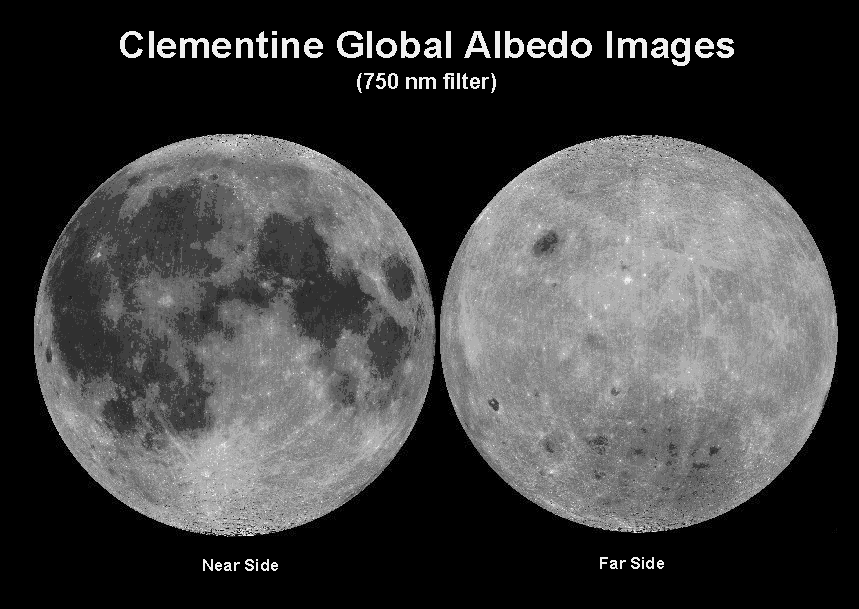
There is no permanent “darkside” to the moon, just darkness that sweeps around it as night sweeps around the spinning Earth.  Click the image below for better view

Lunar nearside (facing Earth) and farside (away from Earth)

Fig 1: Lunar nearside (always facing Earth) and farside (always away from Earth)

The story is actually about the planned crashes of NASA’s GRAIL lunar orbiters. The GRAIL craft orbited in formation and produced the highest resolution maps of lunar mass concentrations ever made (decades ago, these features were called called “masscons”). Fig. 1 is made from composite images by the Clementine Lunar orbiter (1994). Continue reading

Posted in Technology | Tagged , , , , , , | 1 Comment

Without action we lose our energy future

Want to change the future history of energy?

Political pressures are dictating what your grandchildren will study about the decline of American technology.  But we can still change the text in their books.

Current options for future energy supply …

Maybe  low intensity energy sources  like wind, solar, and tidal that cannot meet the stupendous power demand of our growing world society. This option makes us turn down usage so that power demand can match supply.  (Or maybe use China’s techniques and reduce babies allowed to be born?).  This usage turndown with concomitant population reduction is the background idea of many “localization” advocates.  And, if we lose our energy future, this the inevitable path global society will follow.  We lose all our technical abilities, become a 13th century agrarian society with warlords and aristocrats.  The LastTechAge blog was started in an effort to avoid this fate, though we do strongly support the efforts to make “localization” be a meaningful alternative to feudalism.

Or  environmental exploitation.  Use sources that destroy the land’s capability to support population (think strip mining and fracing).  Unregulated mining and refining have toxic tailing ponds.  This is a poor idea.

Or  fission reactors.   2 issues with this – the U.S.’s Gen III improvements make intrinsically dangerous “advanced” designs only a bit safer;   non-reuse of spent fuel means the uranium supply is limited to a handful of decades.  Thorium is plentiful, Continue reading

Posted in Technology | Tagged , , , , , | Leave a comment

Income Inequality and Fusion Energy Research

America’s move to high inequality is correlated to its retreat from technical innovation.

Joseph E Stiglitz’ essay in the 2012 Oct 26 CampaignStops blog of the New York Times is quite instructive.   We outline his thinking, then move onward to probe the link between historic growth in U.S. social inequality growth and funding support for an energy future that has the potential of freeing us from ever-dwindling resources.

Dr. Stiglitz is holder of a Nobel Prize in Economics, former chief economist of the World Bank, Professor at Columbia University, and author of his new book, “The Price of Inequality.”  This is an indictment of the forces pushing us into monstrous inequality.  For example, even in his Preface he says   So much at stakewe are no longer a country of opportunity … our long-vaulted rule of law and system of justice have been compromised, even our sense of national identity may be put into jeopardy.  He is on-target — read the book!

He discusses 5 myths that have floated through the presidential campaign.  This summary uses direct snippets or paraphrasing from his article.

(1)  America is the land of opportunity.  Success of young Americans today is more dependent on their parents’ income and influence than in any other advanced country

Fig 1.  Fraction of total U.S. income of the top earning 10% of households. Income share flat 1945, ramp starts 1981

(2)  Trickle-down economics works.   The  actual situation is that the rich and gotten even richer while the large majority of the country have become less well off.  

(3)  The rich are “job creators,” so giving them more money leads to more and better jobs.   Romney’s own history shows the these people are after the most money by taking a company and restructuring, downsizing, and offshoring it.  This is directly in opposition to enhancing the position for the rest of society.  Fact: many or most crucial innovations in recent decades have been animated  primarily by government-financed research and development.
Continue reading

Posted in Economics | Tagged , , , , , , , | Leave a comment

Fusion Energy – Kill the beast

Fusion research will yield nothing if current U.S. “starve research” policy is continued.  Fusion development must fail under this self justifying strategy.

The National Ignition Facility (NIF) at Lawrence Livermore National Laboratory got all its parameters lined up in a row and fired away.  Their target did not implode to an ignited state as they promised since 1990.  Talking Heads are in motion:  NIF did not produce ignition; why not stop wasting money on fantasies – why not just terminate support of the fusion energy effort?

FusionTerms_dictThe other side of the issue bases its support on the idea that you get what you pay for. The problems and solutions are rooted in the U.S. fusion funding history to be shown in Fig 1.

Update 2013 Apr 13 Commenter (bottom, this post) submitted a public petition in support of fusion energy research.
This needs your support and signature.
Link:   http://1.usa.gov/109CvCW

The Denyer Effort

♦ We follow Francis F. Chen’s convention in An Indispensable Truth for the spelling of those who deny something ♦

Today the denyer effort  is at full throttle – stamp out what little we are doing because NIF proves controlled fusion energy devices will never work. “Everyone knows”  Fusion’s eternal promise – a working fusion power generator is just 20 years away – is stupid. Continue reading

Posted in Technology | Tagged , , , , , , , , , , , | 3 Comments

Energy Independence – Can Exploitation Bring Success?

Harold Hamm proclaims energy independence  by 2020 – No not unless we stop driving.

On 2012 Sep 13, Romney’s Harold Hamm  proclaimed to the House Energy & Commerce Committee the the U.S. could have total energy independence by 2020. Mr. Hamm is the Chair of Mitt Romney’s Energy Policy Advisory Team; though, as he stated, he represented no one but himself, not the Mitt Romney Campaign, not his own company, Continental Resources, nor any other person or thing.

HaroldHamm_img

Harold Hamm 2012

Mr. Hamm and his company has been influential in developing the Bakken oil fields in North Dakota and Montanna, among others.  He is listed by Forbes as the 30th most wealthy person in the US and 78th richest in the entire world.  He has been effective in pushing for the termination of federal land regulation in many different ways.  He is highly influential with the Romney team and was strong force in the Bush administration’s deregulation efforts.

This man is what LastTechAge calls an American ultra.

Knowledge of his background helps parse what Hamm means by energy independence by 2020:  He wants all restrictions removed from idealistic and productive fellows like himself. Continue reading

Posted in Technology | Tagged , , , , , | Leave a comment

Biggest laser fails at fusion

NIF failed in its promise for ignition when driven by fully operational laser.  Should this be a surprise?

The National Ignition Facility (NIF) at Lawrence Livermore National Laboratory delivered its entire laser beam energy to its target and the fuel somehow did not come even close to ignition. This huge US$ 3+ billion facility for inertial confinement fusion (ICF) can not deliver what it promised.  So where is the surprise?

Disclosure_txtThe magazine LaserFocusWorld released this interesting report by Jeff Hecht based on an article in the 2012-Sep21 issue of Science Magazine (summary here) by writer Dan Clery.

ICF could work   Do not misunderstand – it could probably reach breakeven later on. But the NIF scheme will need big  refinements if it is to produce fusion energy.  We described NIF’s real job earlier.  All NIF-related pictures are from the on-line archives from LLNL.

NIFchamber_img

FIg 1: Inside NIF’s target chamber. 192 laser beams focus on a 3 mm target at the very end of the cone-shaped rod (rod much closer to the camera). The holes in the walls allow the beams to come through, some are for instruments to measure how a shot works.

The NIF shot    The issue with the fusion experimental result is that they generated laser power at its full output of 500 billion kilowatts (500 TW) and deposited the full 1.8 M joule (135,000 kW·hr) laser energy onto the implosion target.

For the  last 20+ years this was promised to ignite the fuel (powerful enough to cause hydrogen to fuse into helium, with no additional driving source).  But … no joy.

The end result of the implosion was maybe a factor of 10× below what was promised.  Does this seem like a lot to you?  Would you notice a 10× reduction in your salary? Continue reading

Posted in Technology | Tagged , , , , , , , , | 5 Comments

Hands Off The Strategic Petroleum Reserve

Report today suggests we may be close to another attack on our Strategic Petroleum Reserve

Calls for releasing petroleum from the US reserve are being raised across the globe.  US oil not specified of course, but who else will open their taps?   If we do this again, we will endanger future security for a simple 3 month reward – that probably won’t work.

Pablo Gorondi report, Oil prices slip amid calls for increased output, in the Bloomberg Business Week website today (2012-0829) states that suppliers countries are having a hard time meeting current demand and people seem to be running about screaming OMG, OMG we gotta do something!  One thing to do might be to somehow force more oil from the sand-hogs who obviously want to keep their oil wells to themselves.  Fine, if you really think the Saudi King is just being selfish.   The other is to demand that the IEA “release oil from strategic oil reserves.”  Wonder who those screaming people are?

Prices actually dropped a bit when investors thought that all those countries are going to pump oil from their strategic reserves and make things nice.

Our own work — We include links to our previous posts on availability of crude oil and on national strategic oil sequestrations.  Find all posts on world petroleum reservoirs – click the INDEX button under our banner;  check out  Resources > Oil and Resources > Strategic Petroleum Reserve.

click for all our discussions about oil reserves

Saudi Arabia is having a hard time pumping even what it did 5 years ago, its current wells are running out of easily pumped crude and the new ones are difficult — Patterns in World Oil Production. Same comment can be made for nearly every one of our major world sources of crude petroleum. They are not sand-hogs, they are up against a wall.  To afford to squeeze more out, the price of crude must rise. The data show it, so let’s assume, for at least a moment, that  it is true. Continue reading

Posted in Natural Resources | Tagged , , , | Leave a comment

Offshoring – We’re All Brain Surgeons Now

Train the Boyz in the ‘hood as Brain Surgeons so they get jobs when all that offshoring is over – sort of  per Alan S. Blinder

Jeff Faux img

Jeff Faux

Offshoring has been in the news for over 20 years, now.  We just came across this link to it from a really good new book:  The Servant Economy, by Jeff Faux (pronounced “foe”).

Faux’s  link was to an old, but not obsolete  2006 Mar 29 Diane Rehm show  featuring Alan Blinder (neo-liberal economist, Princeton), C. Fred Bergsten (founding director, Peterson Institute of International Economics), and Jeff Faux (founding president, Economic Policy Institute).   Offshoring is the policy that has been followed by the Reagan, Bush I, Clinton, Bush II, and Obama administrations.

Pump_icn

Click to see Income Pump

Point   LastTechAge’s view should be clear by our comments on opinions by Paul Krugman and David Brooks.  Offshoring is just one  of the organizing mechanisms that underlie the America’s Income Pump that is effectively shifts increasing share of net earnings from the lower incomes into the top earners in this country.

During the discussion, Alan Binder said Continue reading

Posted in Economics | Tagged , , , , , , , , , , | Leave a comment

Patterns in World Oil Production

Data from 7 reserves show the era of cheap oil is drawing closed

We look at the growth of production from oil fields around the world.  Is the world closing in on its production peak in petroleum production, has it passed that point already, or, are we still a long way to go – is powerful growth still in our future?

This report leaves the classical Peak Oil strategy (examining peaks in production) for one that searches for signatures of the end to early-phase expanding growth.

As explained in the Appendix, we look for a time when production patterns break from early exponential growth and roll over to a peak.

This is our expectation, but some of the results surprise.

A Peek at the results:

  • Each data set displays the end of its early startup.  The time of cheap oil is past for each.
  • Each data set displays production peaking.
  • Each region has reasonable expectation for future production (as prices rise).

We examine 7 of the largest Continue reading

Posted in Natural Resources | Tagged , , , , , , , , , , , , , | Leave a comment